
The late autumn air greeted me with a crisp edge as I boarded my flight out of Richmond, Virginia. My destination was Garber, Oklahoma, where I would take part in a special veteran-only hunt organized by Black Dog Hunting, a non-profit that brings veterans together through the outdoors.
Partnered with FowlCo Outfitters, they host this event each year to kick off the Oklahoma waterfowl season. The 2025 hunt took place on November 1 and 2, and I was fortunate to be among those invited. When I arrived in Garber, I met up with several other veterans, including the founder of Black Dog Hunting. The energy was immediate. Meeting other veterans always feels like catching up with old friends, and before long we were carpooling toward the FowlCo lodge, swapping stories and laughter the entire way.
Pulling into the property, we were struck silent for a moment. The lodge was impressive in both size and character. Modern wood beams with a rustic finish framed the space, and the walls were filled with mounted waterfowl, including rare and hybrid species that captured the imagination of every hunter in the room. The decor alone deepened the sense of anticipation for the days ahead.
That evening, the owner of Black Dog surprised us with generous goody bags that included knives, hoodies, stickers, coffee cups, whiskey glasses, and hunting gear. It was a thoughtful touch and a reminder of how much effort went into making this experience special for us.
Day One: Ducks and
Brotherhood
The first morning began early, as most hunts do. After a quick breakfast burrito and a cup of strong coffee, we loaded into the guides’ trucks and headed toward the hunt site.
The sun had not yet broken the horizon when we arrived at a large pond surrounded by open pasture and distant wind turbines. The still air carried the faint hum of the turbines, and the first light revealed a sky washed in soft pink and gray. We settled into a brushed-in A-frame blind tucked into the tall yellow grass.
Before long, the prairie came alive. The calls of wigeon and gadwall echoed around us, and every sound seemed to build anticipation. As legal shooting light approached, a calm focus settled over the group.
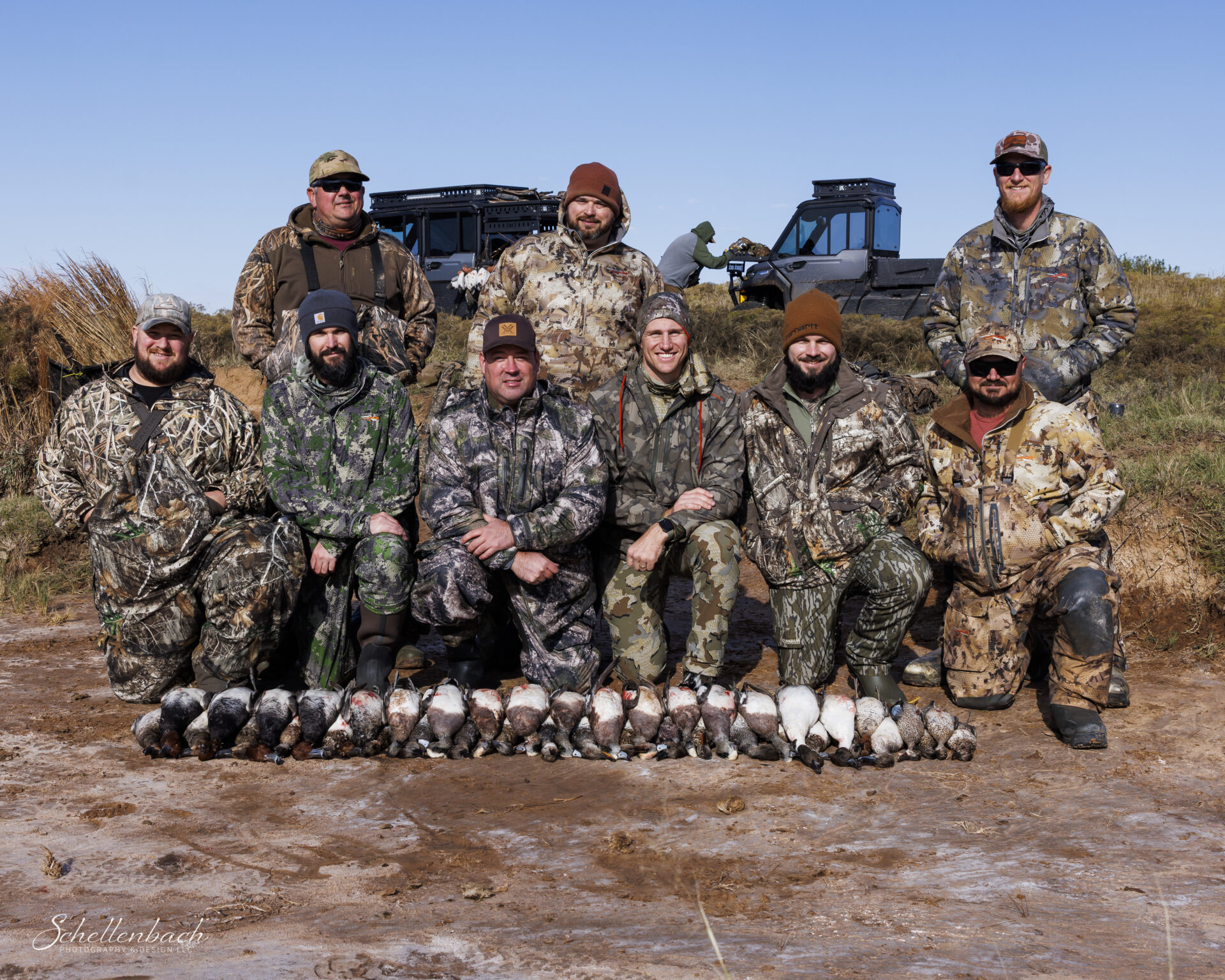
The first flock of wigeon came low over the water. When the call to shoot came, barrels rose almost in unison. The hunt was on. Over the next few hours, redhead, pintail and teal joined the mix, giving us steady action and plenty of excitement. Between volleys, all eyes followed an enthusiastic black Labrador retriever as he launched into the water to retrieve each bird. Watching him work was mesmerizing. His focus, athleticism, and drive reflected everything the day stood for.
By midday, our group of eight hunters had collected a mixed bag of wigeon, pintail and teal, just shy of a full limit. Back at the lodge, a proper southern fried chicken lunch was waiting, and the rest of the afternoon unfolded naturally. We ate, laughed, and shared stories of the morning’s hunt, each retelling bringing the moments to life all over again.
The remainder of the day was filled with learning and connection. One veteran, now a professional dog trainer, led a session on retriever handling and obedience. Another, a former combat camera Marine, gave a lesson on field photography and capturing the essence of a hunt through storytelling. Later that evening, we gathered outside for a clay-shooting game called “knockout.” The laughter and friendly competition carried through the cool air until dinner was served.
The night closed with good food, a few drinks, and the sound of college football playing softly in the background.
Day Two: The Cranes of the Plains
The second morning brought a new challenge: sandhill crane hunting. Often called the “ribeye of the sky,” these birds are as impressive as they are wary. Standing nearly four feet tall with wingspans over six, they move across the sky in massive flocks that can be seen from miles away. Their calls are deep and resonant, an ancient sound that seems to belong to another time.
We set up in layout blinds before dawn, the temperature in the upper 30s and a steady wind moving across the open fields. The horizon glowed orange as the sun began to rise, and distant cranes started to appear in every direction. The guides called with perfect timing, trying to turn the great flocks our way. Many passed high overhead, uninterested, but a few curious birds broke off and circled closer. Hearing their powerful, rattling calls grow louder as they approached made my heart pound.
When the moment finally came to shoot, everything else disappeared. When the echoes faded, two sandhill cranes lay still in the stubble, their size and beauty impossible to ignore. We watched more flocks pass by before packing up for the day, satisfied by both the challenge and the experience.
The ride back to the lodge was quiet, filled with the easy kind of silence that follows a good hunt. After lunch, we packed our gear and said our goodbyes. The handshakes were firm, the smiles genuine. Each of us left with a renewed sense of connection, both to the outdoors and to one another. That, to me, was the true reward of the trip.
It wasn’t just about the birds, the dogs, or the shots fired. It was about the shared moments, the quiet understanding that camaraderie doesn’t end when the uniforms come off. Sometimes it just takes a new shape—under a wide Oklahoma sky, beside a black retriever, or in the laughter of brothers brought together by the hunt.