

BY BRIAN BOOG
Hello everybody and welcome back to this month’s Small Waters. The water’s warming up and the fish have no idea what to do because of this crazy weather we’ve been having.
Next month I will be 100% back in action writing about a new Small Water. I’m thinking of Lake Prince in Suffolk. Stay tuned!
This past month I had to go to Florida for two weeks and help out my parents so I wasn’t able to get out and focus my time on a new lake.
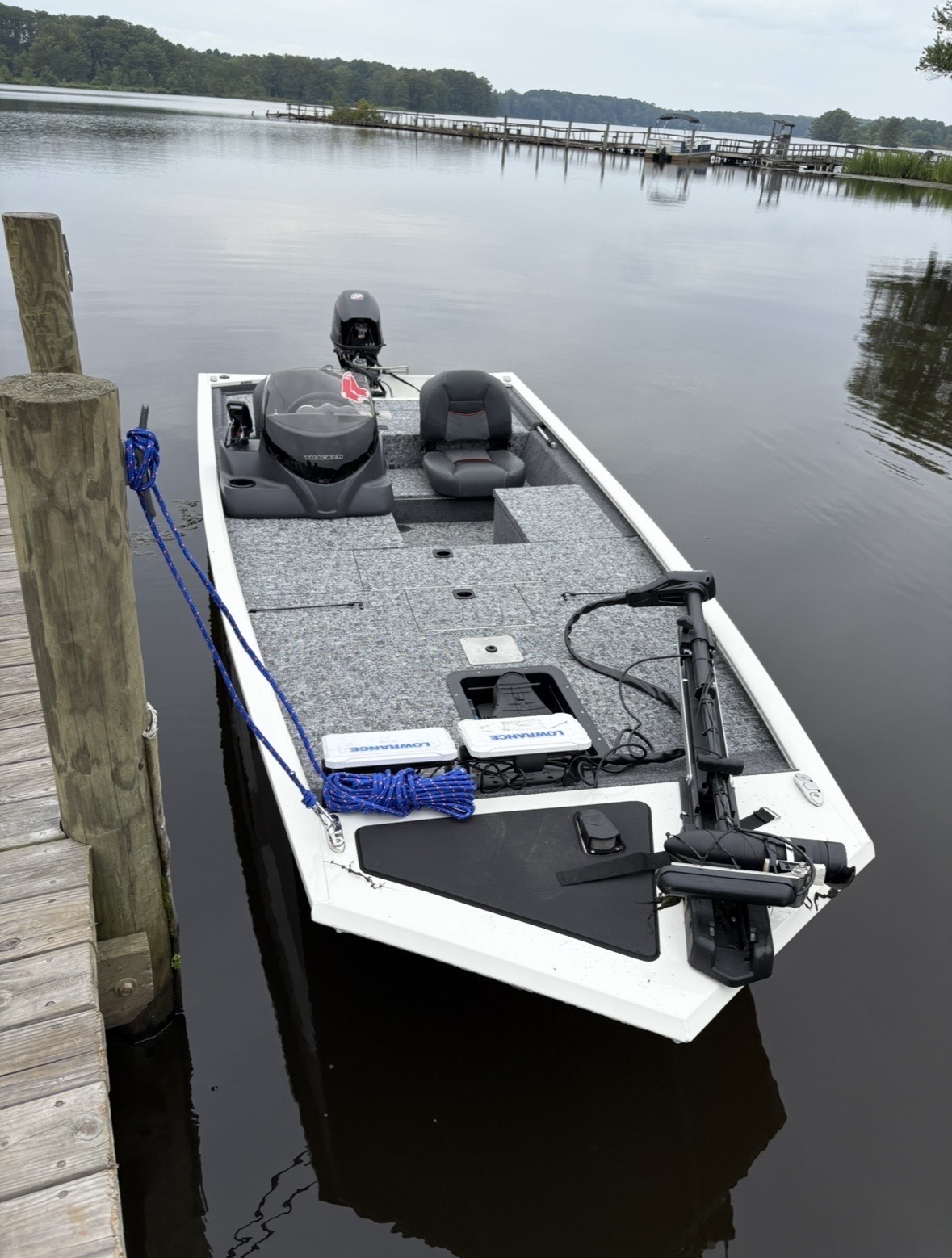
I did get out to Hardwood’s Mills and Chickahominy Lake a couple times with my new Lowrance Eagle Eye 9 forward facing sonar unit! Due to my lack of fishing that’s what I’m going to be talking about in this month’s column.
I never really thought about owning FFS prior to a couple of weeks ago. It just was way too expensive and I thought it was unattainable and I was cool with that. In my few years working with Major League Fishing’s Bass Pro Tour and seeing all the pro’s using their FFS, I thought it was a really good tool. I was happy that they all had it, regardless of brand. I’m not against it in any way, shape, or form. I just thought I’d never actually be able to afford it.
Not until the Lowrance Eagle Eye 9 came out. I had read about it when it first dropped, saw the $1,000 price and thought it was something for another day – someday, if it ever went on sale. I just put it on the back burner, thinking some day I’d find one used.
A couple of weeks ago two things happened. A friend at work bought a Eagle Eye 9 used and said it was fantastic, and I also saw that Bass Pro Shops had the unit on sale. I still have the 10% off card for buying the boat at BPS, so I bit the bullet and bought it. Holy smokes! I wish I’d bought it when it came out! Why did I wait so long for?
Before I get into my thoughts about the unit, let’s start out here with the unit itself and what it is.
The Lowrance Eagle Eye 9 is 9”, self-contained, stand-alone FFS unit that also has 2D sonar, down imaging with fish reveal, mapping, forward facing and down sonar. It doesn’t have side imaging. It can’t network with other Lowrance units and the transducer only works on the Eagle Eye 9.
The transducer it comes with is the same technology that Active Target 2 has, just less of it. Active Target 2 has a 135-degree beam. The Eagle Eye 9 has a 30-degree beam. To sum it up, it’s an all-in-one, non-networking, stand alone unit. What it really is, is awesome!
The installation took about half an hour. From what I read on the interwebs, a dedicated battery and six gauge wire is best for the clearest picture for FFS.
I took the online advice and that’s exactly what I did. I wired it up and mounted the transducer onto my trolling motor with a inexpensive bracket I bought from BPS. It really couldn’t be simpler. It has two cords on the back of the unit. Power and transducer. Plug them in and you’re ready to rock and roll.
For the units settings, I watched a ton of YouTube videos to try to understand what the unit can do and not do.
The general consensus was in forward mode, 100 feet out is good, but 70-90 is ideal. As for how many feet down, just keep the lake bottom on the bottom third of your screen. Seemed simple enough.
There’s also noise rejection, surface clarity and contrast. You can play with these and see what works best for you.
For super clear water, you keep the surface clarity on off or low. I put mine on medium. I keep the the noise rejection on medium and I like the contrast set at A4. This is what’s working for me right now. I’m sure they’ll change as I get more familiar with it.
The left side of the screen is a blank triangle. When I said that the Eagle Eye 9 has less degrees of sonar than Active Target 2, this is where it shows. It’s just something you have to get used to.
The down sonar feature I’ve read is great for drop-shooting and especially ice fishing. I haven’t used the down sonar yet. Hopefully, I never have to use it ice fishing here in Virginia.
Once you turn the unit on, get your settings to your liking, this unit is obscenely easy to figure out and learn. It really is. It took me about five casts to see my lure falling and follow it on the screen back to the boat.
I’m certainly not saying that I’m good at FFS or have any sort of skills with it, I’m just saying it didn’t take me long to get the gist of it. I really like jig fishing with it.
I caught my first jig fish with it pitching to a cypress tree and watching three fish lunge at it. I set the hook on the winning fish looking at the screen, not feeling a thing with the rod. Crazy!
The Lowrance Eagle Eye 9 is an entry level version of forward facing sonar. It’s ideal for kayaks and small boats. It’s a lot of fun seeing what’s going on in front of you.and learning about structure that you had no idea existed.
One thing that I learned right off the bat by watching the screen was that I was fishing way too fast. I couldn’t believe how fast my bait was going, therefore it stayed up really high in the water column. – not good.
In my very limited time using the Eagle Eye 9, the thing I like the best is seeing what your retrieve does to your bait under the water. It’s eye opening.
I’m not here to argue for or against forward facing sonar. I’m just sharing what I’ve discovered using it. It’s just another tool to use when you’re fishing. I’m happy I finally bought it. It’s fun and very addicting, there’s no doubt about that.
I’ll see you out on the water. If you have any suggestions of where I should fish next Email: woodsandwatersmagazine @gmail.com
ello everybody and welcome back to this month’s Small Waters. The water’s warming up and the fish have no idea what to do because of this crazy weather we’ve been having.
Next month I will be 100% back in action writing about a new Small Water. I’m thinking of Lake Prince in Suffolk. Stay tuned!
This past month I had to go to Florida for two weeks and help out my parents so I wasn’t able to get out and focus my time on a new lake.
I did get out to Hardwood’s Mills and Chickahominy Lake a couple times with my new Lowrance Eagle Eye 9 forward facing sonar unit! Due to my lack of fishing that’s what I’m going to be talking about in this month’s column.
I never really thought about owning FFS prior to a couple of weeks ago. It just was way too expensive and I thought it was unattainable and I was cool with that. In my few years working with Major League Fishing’s Bass Pro Tour and seeing all the pro’s using their FFS, I thought it was a really good tool. I was happy that they all had it, regardless of brand. I’m not against it in any way, shape, or form. I just thought I’d never actually be able to afford it.
Not until the Lowrance Eagle Eye 9 came out. I had read about it when it first dropped, saw the $1,000 price and thought it was something for another day – someday, if it ever went on sale. I just put it on the back burner, thinking some day I’d find one used.
A couple of weeks ago two things happened. A friend at work bought a Eagle Eye 9 used and said it was fantastic, and I also saw that Bass Pro Shops had the unit on sale. I still have the 10% off card for buying the boat at BPS, so I bit the bullet and bought it. Holy smokes! I wish I’d bought it when it came out! Why did I wait so long for?
Before I get into my thoughts about the unit, let’s start out here with the unit itself and what it is.
The Lowrance Eagle Eye 9 is 9”, self-contained, stand-alone FFS unit that also has 2D sonar, down imaging with fish reveal, mapping, forward facing and down sonar. It doesn’t have side imaging. It can’t network with other Lowrance units and the transducer only works on the Eagle Eye 9.
The transducer it comes with is the same technology that Active Target 2 has, just less of it. Active Target 2 has a 135-degree beam. The Eagle Eye 9 has a 30-degree beam. To sum it up, it’s an all-in-one, non-networking, stand alone unit. What it really is, is awesome!
The installation took about half an hour. From what I read on the interwebs, a dedicated battery and six gauge wire is best for the clearest picture for FFS.
I took the online advice and that’s exactly what I did. I wired it up and mounted the transducer onto my trolling motor with a inexpensive bracket I bought from BPS. It really couldn’t be simpler. It has two cords on the back of the unit. Power and transducer. Plug them in and you’re ready to rock and roll.
For the units settings, I watched a ton of YouTube videos to try to understand what the unit can do and not do.
The general consensus was in forward mode, 100 feet out is good, but 70-90 is ideal. As for how many feet down, just keep the lake bottom on the bottom third of your screen. Seemed simple enough.
There’s also noise rejection, surface clarity and contrast. You can play with these and see what works best for you.
For super clear water, you keep the surface clarity on off or low. I put mine on medium. I keep the the noise rejection on medium and I like the contrast set at A4. This is what’s working for me right now. I’m sure they’ll change as I get more familiar with it.
The left side of the screen is a blank triangle. When I said that the Eagle Eye 9 has less degrees of sonar than Active Target 2, this is where it shows. It’s just something you have to get used to.
The down sonar feature I’ve read is great for drop-shooting and especially ice fishing. I haven’t used the down sonar yet. Hopefully, I never have to use it ice fishing here in Virginia.
Once you turn the unit on, get your settings to your liking, this unit is obscenely easy to figure out and learn. It really is. It took me about five casts to see my lure falling and follow it on the screen back to the boat.
I’m certainly not saying that I’m good at FFS or have any sort of skills with it, I’m just saying it didn’t take me long to get the gist of it. I really like jig fishing with it.
I caught my first jig fish with it pitching to a cypress tree and watching three fish lunge at it. I set the hook on the winning fish looking at the screen, not feeling a thing with the rod. Crazy!
The Lowrance Eagle Eye 9 is an entry level version of forward facing sonar. It’s ideal for kayaks and small boats. It’s a lot of fun seeing what’s going on in front of you.and learning about structure that you had no idea existed.
One thing that I learned right off the bat by watching the screen was that I was fishing way too fast. I couldn’t believe how fast my bait was going, therefore it stayed up really high in the water column. – not good.
In my very limited time using the Eagle Eye 9, the thing I like the best is seeing what your retrieve does to your bait under the water. It’s eye opening.
I’m not here to argue for or against forward facing sonar. I’m just sharing what I’ve discovered using it. It’s just another tool to use when you’re fishing. I’m happy I finally bought it. It’s fun and very addicting, there’s no doubt about that.
I’ll see you out on the water. If you have any suggestions of where I should fish next Email: woodsandwatersmagazine @gmail.com