
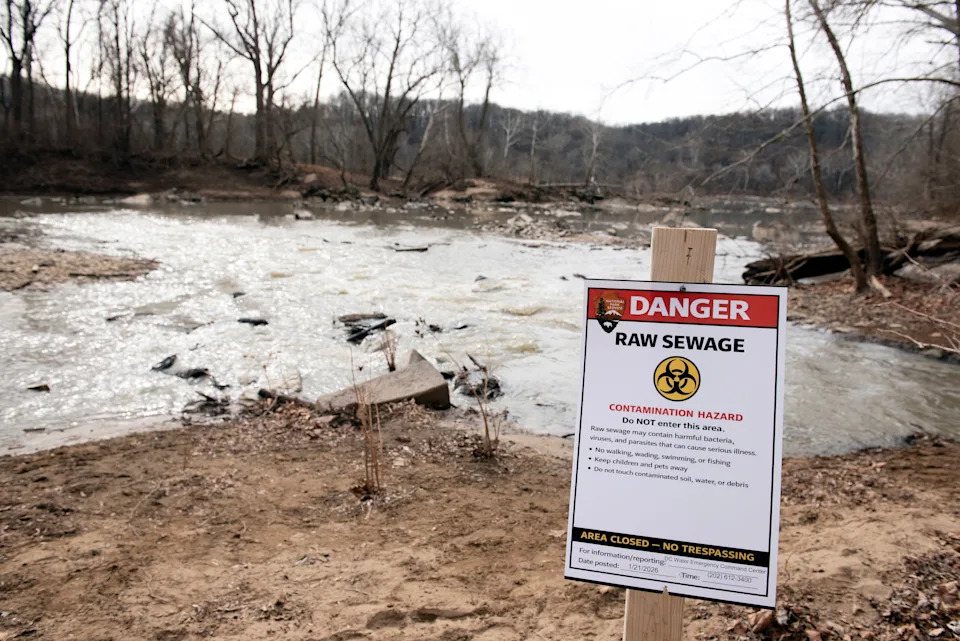
January’s 250 million gallon raw sewage leak was a result of the aging Potomac Interceptor infrastructure.
In 1810, Washington’s sewer system was constructed to dump waste into the Potomac, and some say was the beginning of the end of a prolific herring, rockfish and sturgeon fishery. In the mid 1960s, President Lyndon Johnson called the Potomac a “national disgrace”. Clean Water legislation passed. In the 1970s, largemouth bass reappeared followed by subaquatic vegetation. Water quality improved, however population density increased dramatically while infrastructure aged and sewage spills became routine.
Moderate precipitation overwhelms treatment facilities, forcing sewage to back up into streets. To prevent this, DC’s sewage system deposits overflow wastewater into the Potomac, adding up annually to three times the amount of Interceptor’s spill.
The Potomac Interceptor carries Northern Virginia and Montgomery County Maryland sewage to DC’s Blue Plains sewage treatment plant. The Potomac RiverKeeper says the federal government recognized concerns several years ago, identifying pipe corrosion in 2022. There’s a funding shortfall, nearly $2 billion, to upgrade existing systems.
Raw sewage poured unabated into the Potomac for several weeks, showing how unprepared local jurisdictions were. DC, MD, VA and the federal government eventually stopped the blame game and took steps to repair. Jurisdictions tested for E. coli. Recreational advisories were posted to avoid water contact. However, there are other harmful chemicals and toxins in raw sewage. Among them, synthetic estrogen in birth control pills can affect fish reproduction, causing male fish to develop female characteristics leading to population declines and even extinction.
Drought conditions, frozen water, and tidal flows slowed the sewage exodus. While advising people and pets to avoid water contact, commercial blue catfish harvesting continued. To be safe, several tournament groups postponed or cancelled events. Tournament directors are considering using rubber gloves and face guards to prevent contact with Potomac water.
Officials maintain there’s no threat to drinking water, however environmental advocates and scientists have serious concerns about the spill’s effect on the river’s ecosystem and aquatic life.
Potomac RiverKeeper Dean Naujoks says wastewater chemicals and E. coli bacteria contaminate river sediment and impacts fish reproduction, bird reproduction, kills insects, and contaminates soil. Harmful pathogens and excess nutrients can lead to diseases in animals and harmful algae blooms. These blooms, typically occurring in August and September, deplete oxygen and cause fish kills. Unlike oil spills, sewage cannot be removed from water. DC Water’s restoration plan will be implemented close to the spill site, costing $20 million.
This year’s Potomac River bass fishing season will certainly be impacted by the Interceptor spill and exasperated by “routine” spills with farm and lawn runoff.
In a tough year, the Potomac can’t afford a continued loss of SAV’s and fish kills. The fix comes with a high price tag, an investment in replacing aging infrastructure which may be coming late as overdevelopment isn’t reversable.
Author Capt. Steve Chaconas is Potomac bass fishing guide & freelance writer. Potomac River reports: nationalbass.com. YouTube video channel NationalBassGuide
Lipless crankbaits find fish and emerging grass once water hits 55 degrees. Grass in April is a gold mine. Thinner and taller lipless baits can be fished through grass. To go slower and deeper, try heavier baits. When ripped from grass, allow to drop in a controlled fashion, triggering strikes. Use a medium action 7-foot rod cranking for casting distance. GAMMA 12-pound test fluorocarbon is perfect for ripping free from grass or hook sets on long casts. Set the hook when the rod is loaded. Red colors are best when bumping bottom, shad patterns are better when ticking grass tops, gold in stained water. Hooks are typically a problem for most lipless crankbaits, so upgrade to quality wide gap hooks. They’re angled, very difficult for bass to throw, especially fish hooked on longer casts. Short shank trebles allow you to replace factory hooks with the next size up!