

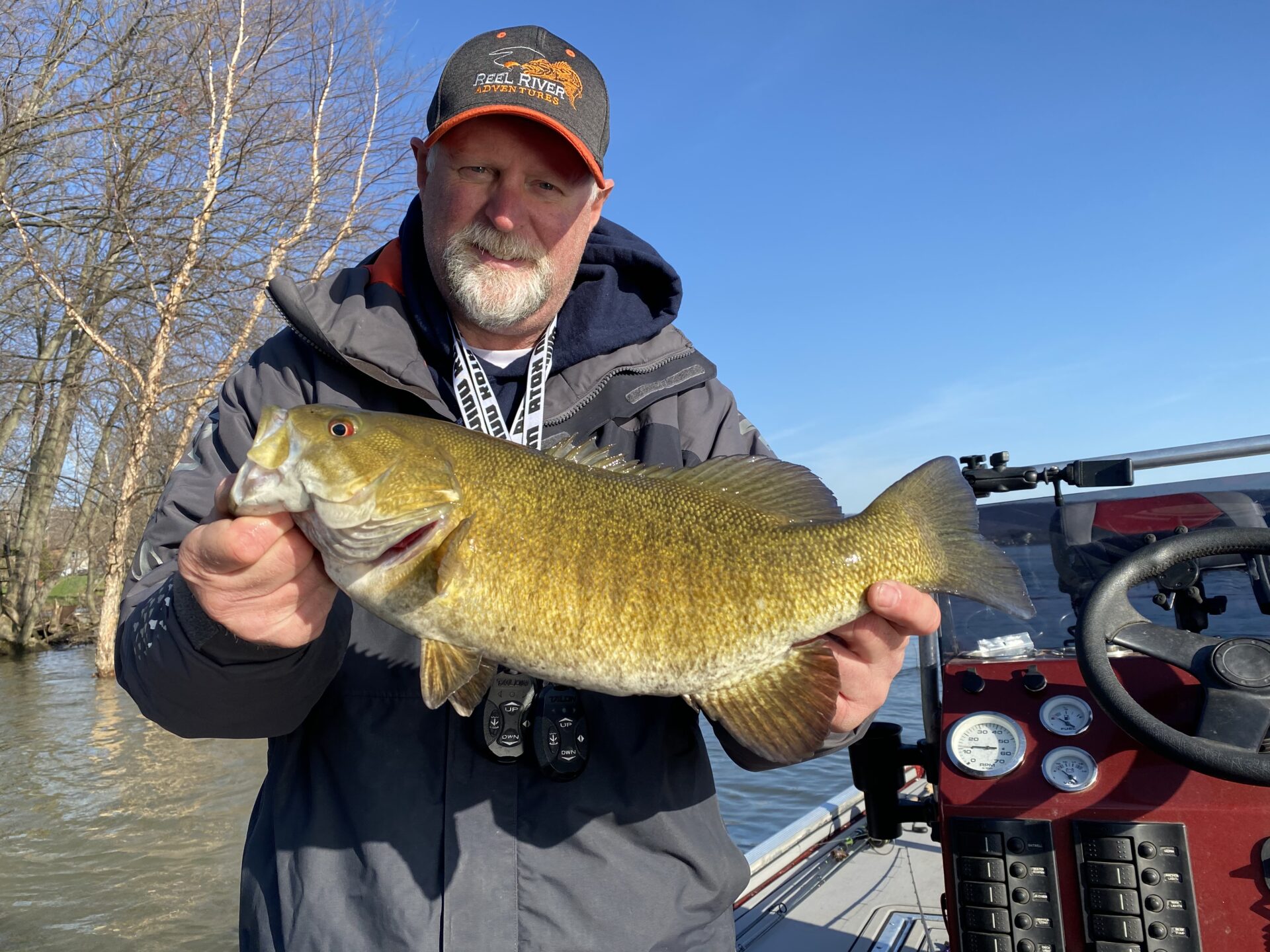
On those days when bass are turning their noses up on your favorite soft plastic profile, consider alternate rigging options to help change the attitude of the bait and the bass. The notion of bass responding positively to that same bait, rigged in a different configuration is foreign to some, but that is what I often find.
With creature profiles, I start most days using a standard jig configuration. The Ned or football jig with an exposed hook is my favorite for hooking and holding bass. The fixed front weight on these jig hooks generally does the job, day in and day out. However, in particularly snaggy areas, rigging my favorite creature baits this way has its drawbacks. Using these fully exposed hooks in rocks or woody areas can be a nightmare.
Rigging options that change the balance and location of the weight, help protect the hook and allow the lure to move more naturally are a better option in many cases. This change can make the difference in these situations.
Since the majority of my fishing happens in rivers, my main concern is how the lure comes through rocks and snags. Making these rigging options a top choice when snaggy areas start frustrating clients. While there are several options, here are three favorite rigging options and some custom hacks to help put more bass in your boat this year.
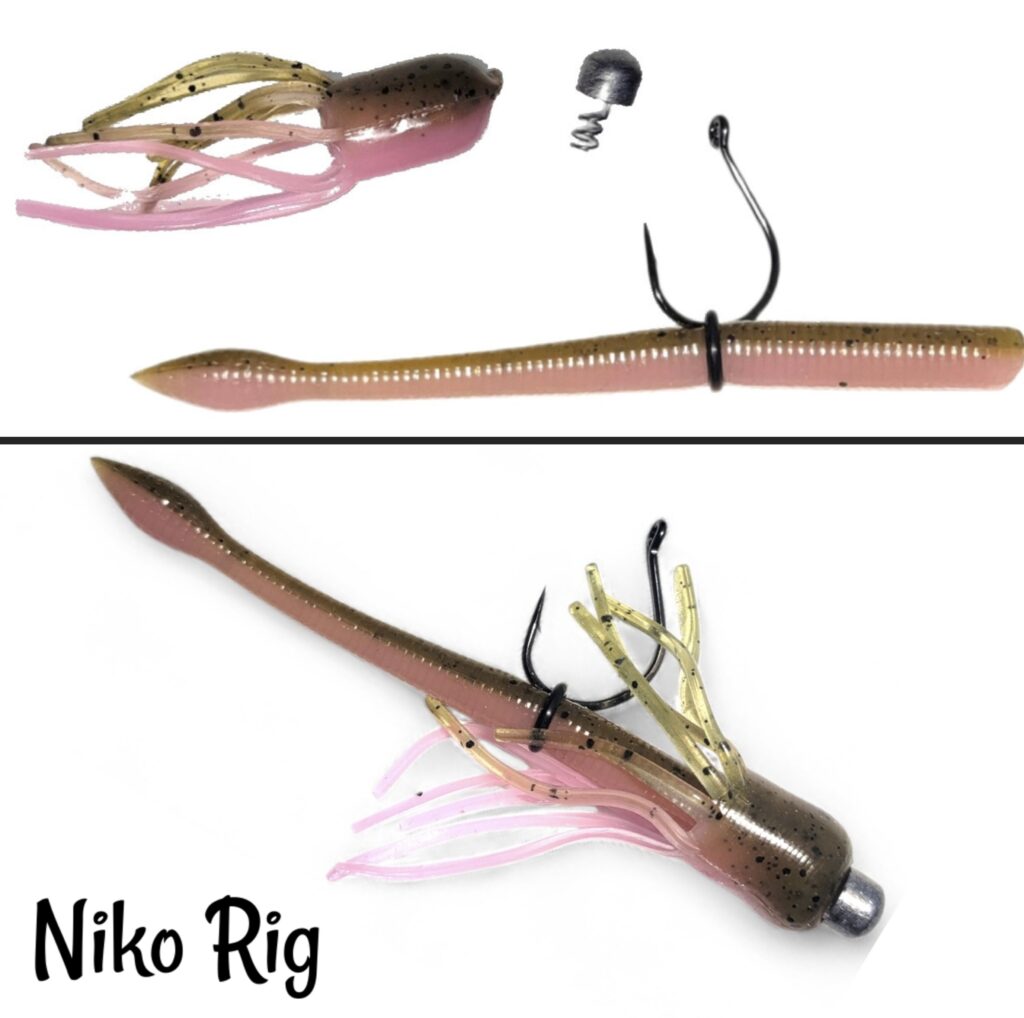
Niko Rig
When first introduced to the Niko Rig, my honest take was “why didn’t I think of this?” Anglers had been nail weighting soft plastics for decades, this just seems like the next logical step in the evolution of the nail rig. The ability to place the fixed weight on one end of the creature and place the hook and hinge point inches away is genius. This configuration allows the bait to fall and react differently as the anglers walks, drags or hops the bait along the bottom. And in most cases, this rig will go through rocks and debris better. This rig completely changes the action of the bait.
Another angler advantage with this rig is the ability to feel the bottom in almost any depth. A variety of weight configurations can be used for this rig—nail style weights that are completely hidden, barbed studded weights and weights with coil keepers. But here is the advantage; tungsten feels different on the bottom than lead, and so does steel. And all of these options are available in this rig.
Additional angler hacks can make the Niko Rig even better. The configuration shown in the photo uses an O-Ring and a wide gap finesse hook. However, a friend of mine likes to use a small #1 offset hook and hides the hook point in the lure. It comes through some of the thickest debris we fish. Another great hack is using a #6 or #8 wood screw as the weight. And as I mentioned earlier, the feel of metal contacting the bottom lets anglers know what kind of structure they are on.
Tokyo Rig
Growing up, my pap used large bottom bounce rigs to fish walleye jigs in deep water. These heavy 1-4 ounce rigs kept his favorite curl tail baits just inches off the bottom as the rig’s weight bounced along. Jump ahead some 50+ years and we have the Tokyo Rig used in ‘finesse’ mode. Downsized to fish for bass in a number of configurations, many in water less than 8’ and perfect for lakes as well as rivers.
The Tokyo Rig, unlike the Bonsai Rig, comes without weights and allows the angler to choose not only the style of weight, but the amount of weight to meet the situation. Bullet, egg and cone style weights can be selected from as light as 1/16th ounce. Likewise, these weights come in lead, tungsten, brass or steel, giving anglers the option to manage any type of rock or vegetation.
My river conditions typically seem to prefer a light weight steel egg sinker over bullet weights. They just come through the rocks and ledges better. We also go through stages of “snot-grass” at times of the year. This green slimy algae clings to rocks and standard jigs that get clogged up and covered in the green mess as soon as it touches the bottom. The great part of the Tokyo Rig is that the weight is completely independent of the soft plastic lure. The hook is on a split ring and allows the lure to rise and fall more naturally without directly contacting the bottom. The weight is in contact with the lure freely moving inches above it. The action along the bottom is as natural as it gets. Nothing against short drop-shot rigs, but the Tokyo Rig is easier to cast and provides better feel with the bottom structure. For a rocky river, the Tokyo comes through it with less snags and far less sacrificed drop weights.
Another advantage to this free movement is that the hook-up ratio is fabulous. The free swinging movement between the hook and the weight does not offer any added leverage to a hooked fish, keeping them pinned with very few losses.
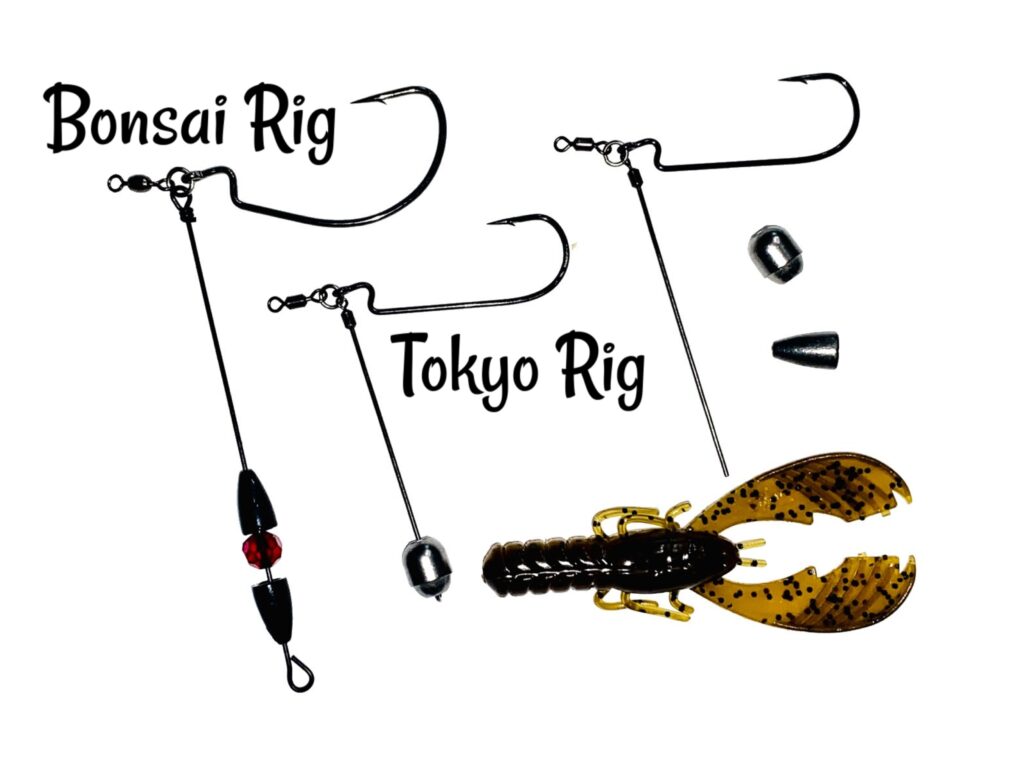
One of my favorite hacks with this bait is the MYO (Make Your Own) option. Any light gauge wire can be used here and in most all any length needed. No special tools are required. A roll of wire and the same pair of needle nose pliers every angler has onboard does the trick. I can make up a dozen rigs in a matter of minutes.
Jika Rig
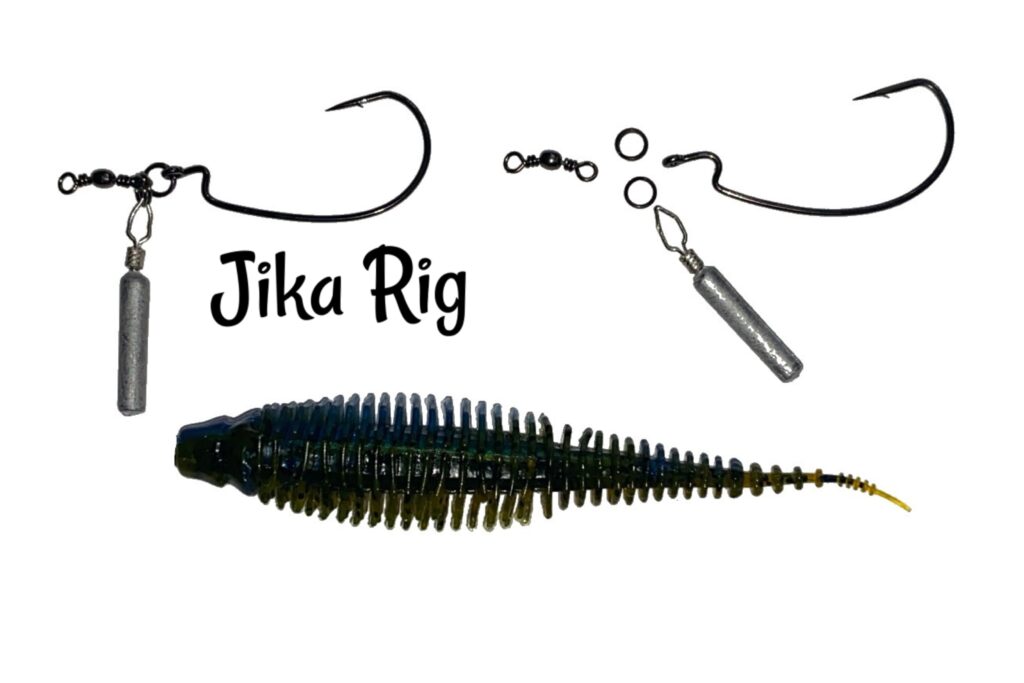
The Jika Rig, sometimes spelled Gika, is similar to the Tokyo Rig in that the weight is connected to, yet independent of the free moving soft plastic. The difference being that there is no drop wire, the weight is connected to this rig using a split ring.
This rig is incredibly easy to cast and adds even more finesse capability to fishing creature and swim baits than larger rigs. The jig’s configuration allows for clean contact with the bottom, but allows the boat to move as if it isn’t connected at all. I find it best with neutral or buoyant (floating) baits. With these the moment the rig is stopped, the lure lifts and moves like it is alive. The drag and stop action allows the bait and keep moving long after the rig has stopped.
Reaction strikes with the Jika Rig is most impressive when the bass seem shut down. Some of the days most violent strikes come after a few sharp snaps and a short stop along the bottom. To see this in action, the bait looks as though it is attempting to burrow or get into a defensive position.
While some companies are making packaged Jika/Gika Rigs, the best hack here is to simply make your own and spend some time watching a variety of different soft plastics in shallow water to see how the lure moves after the rig has stopped. The action seems to be just as appealing to the bass as it was to me when I first started playing with it.
Anglers who fish bodies of water that experience heavy angler pressure understand that success often requires the ability to adapting and learning. Fish do get conditioned in these situations and can ignore the same old presentation. So when confronted with questions like,
“How do I overcome heavy fishing pressure when bass seem shut down?” or “Do bass become conditioned to certain lures and profiles?” This is my answer.
Success on the water often depends on the angler’s ability to adapt to changes. Environmental factors such as changing weather conditions, dropping barometric pressure, rising water levels, and temperature swings, can be difficult at first, but anglers learn to adapt. Behavioral changes can be a bit more complex, with seasonal movement, spawning and feeding patterns being triggered by weather patterns. This can and will be even more of an issue on heavily targeted bodies of water. Time on the water is the best teacher; soak up every drop of it. Continue to think out of the box and never stop learning.
Author Chris Gorsuch is a licensed charter guide in the state of Pennsylvania. He started the Reel River Adventures guide service in ‘07 and spends 225-250 days on the water annually. His home base is on the Susquehanna River. Follow his daily fishing reports on Facebook ‘Reel River Adventures-RRA’ & Instagram @Chris_Gorsuch