

Yes, a Phillips head screw can be removed with a butter knife, but the right tool makes the job quite a bit easier. Selecting the correct tool will improve task efficiency and bring a level of success that might otherwise be difficult to achieve. This is not to say that multiple lure types can be thrown from the same fishing rod, just that certain rods are better suited for specific lure types, sizes and weights. Choosing the right rod can enhance casting accuracy, how the lure performs and keeps the fish pinned after the hookset.
As with many topics, there are indeed exceptions to the rule. However, in many cases one rod does not work “best” for all lure options. When choosing a fishing rod for various types of lures, it’s important to consider both the rod’s power and action. Rod power, which refers to the backbone strength, should correspond to the weight of the lure you’re using—heavier lures require rods with more power, while lighter lures are best paired with lighter rods. The rod’s action, or tip flexibility, should match the type of hook on your lure. Fast-action rods are ideal for single-hook lures like jigs (Neds, tubes, creatures, skirted jigs, etc.) because they provide a quick, responsive hookset. In contrast, moderate-action rods are better suited for treble-hook lures such as lipped and lipless crankbaits, and jerkbaits, as they offer more give and help prevent hooks from tearing out during the fight with a fish.
Rod Power
Fishing rods are generally rated by power, for example how much energy it takes to bend the rod. The higher the number, the stiffer the rod’s backbone will be. This is important for a number of reasons. Lure weight will factor into the power selection, as the power increases, heavier lures are thrown with less effort. Conversely, lighter weights down to a 16th ounce will cast further on low-powered rods. Another factor to consider when selecting rod power is the weight of the fish. While today’s rods are stronger, it is still easier landing fish like pike and musky on rods with greater power.
Some rod manufacturers use power ratings indicated by numbers as low as 00 for super light and as high as 6 for extra-extra heavy. For bass fishing, most anglers are choosing rods that are rated 2, 3 or 4 depending on lure choice and body of water. Again, this does not dismiss the need for lighter or heavier in the range above. Below is general view of how these power numbers match up to designations.
1 = Light (L)
2 = Medium Light (ML)
3= Medium (M)
4 = Heavy (H)
5 = Extra Heavy (XH)
It is worth noting that while these are fairly standard power ratings, the actual power from manufacturer to manufacturer will feel a little stiffer or softer depending on the models and their own power ratings. For example, a 3 / Medium powered rod from one manufacturer may feel stiffer than a 3 / Medium powered rod from another manufacturer. To make matters a little more confusing, some manufacturers offer a medium-heavy rod, and ¾ heavy power options. The important take away from all this is, the higher the number, the stiffer the fishing rod will be.
Rod Action
Action refers to where the rod flexes or starts to bend. While this can be a little confusing, the quicker the action, the closer the bend is to the tip of the fishing rod. For example, an extra fast action means that the tip of the rod is where most of the bend will be. Likewise, a rod with moderately slow action, the bend (action) is much closer to the middle of the rod blank. Another way of looking at rod action is the faster the action, the quicker the rod returns to straight after the load is removed, simply because a smaller portion of the rod bends. Generally, a fast action creates instant force during the hookset making it ideal for lures with single hooks and less ideal for smaller sized hooks or lures with treble hooks where the force could lead to the hooks tearing free from the fish.
The action ratings on modern fishing rods generally range from slow to extra-fast, with moderate and fast actions filling the need for most of my river fishing applications.
Line and lure weight ratings are generally listed on fishing rods as well. They provide a suggested range of line and lure weight to match the rod. This is a decent guideline for anglers and adds clarity to the power and action ratings.
So, what does all of this mean and how does it help when selecting a fishing rod for multiple lure use verses a specific lure? Here are a few thoughts that have helped me place the right rod in the hands of clients, some with little fishing experience.
Crankbait Rods
Cranks in my opinion simply work better when the rod is designed with a softer-slower action that meets the weight criteria of the crankbait itself. For me, a medium powered rod with moderate action is best. If using tiny cranks, I may go down to medium-light power and conversely, go to a medium heavy if throwing a larger crankbait with the same moderate action. Depth and vegetation can also change the power needed, but the moderate action remains the same. I also prefer today’s composite rods over fiberglass for cranks. I find fiberglass too large and clumsy for my liking. I own at least 5 fiberglass cranking rods and they spend more time in the corner of my tackle room than in my boat. My preference for length is 6.5 to 7 feet, but I have been known to go longer from time to time.
Jigging Rods
When it comes to bass fishing with Neds, tubes and swims on jig heads weighing 1/16th to 3/16th ounce, I find a medium-light to medium power rod with a fast action is in the sweet spot. While many prefer rods with extra-fast action, I find my hookset and line choice add too much additional power. For jigging, I prefer braided main line with a 4’ fluorocarbon leader. That combo on a rod with an extra-fast action tends cause more line breaks, so dialing down the action some, helped overall. On that topic, I can share a story where a client had difficulty keeping bass hooked up. Shoulder surgery weakened his hook sets, so I moved him from a fast action rod to an extra-fast. The result was fairly eye opening.
Jerkbait Rods
Now this may surprise some, but I prefer medium power rods with a fast action, but I feel mono line is the key here. Control when twitching a suspended jerkbait is easier for me personally on rods with fast action over moderate action. While I believe a moderate-slow action would help keep treble hooks from tearing free, I believe the stretch of the mono reduces the action enough during the hookset to allow it. Earlier we discussed how a fast action rod can lead to tearing treble hooks free during the fight, and that is where the mono line helps. The fast action offers better control of the lure, while the stretch of the mono helps to reduce the chance of the hooks pulling free during the fight.
As this piece closes, it is obvious that more could be added and covered on this topic. And while this was specific to smallmouth, walleye anglers would likely select their rods differently, as would anglers who target largemouth in dense vegetation. I hope this helps and I am always available to answer questions that readers may have.
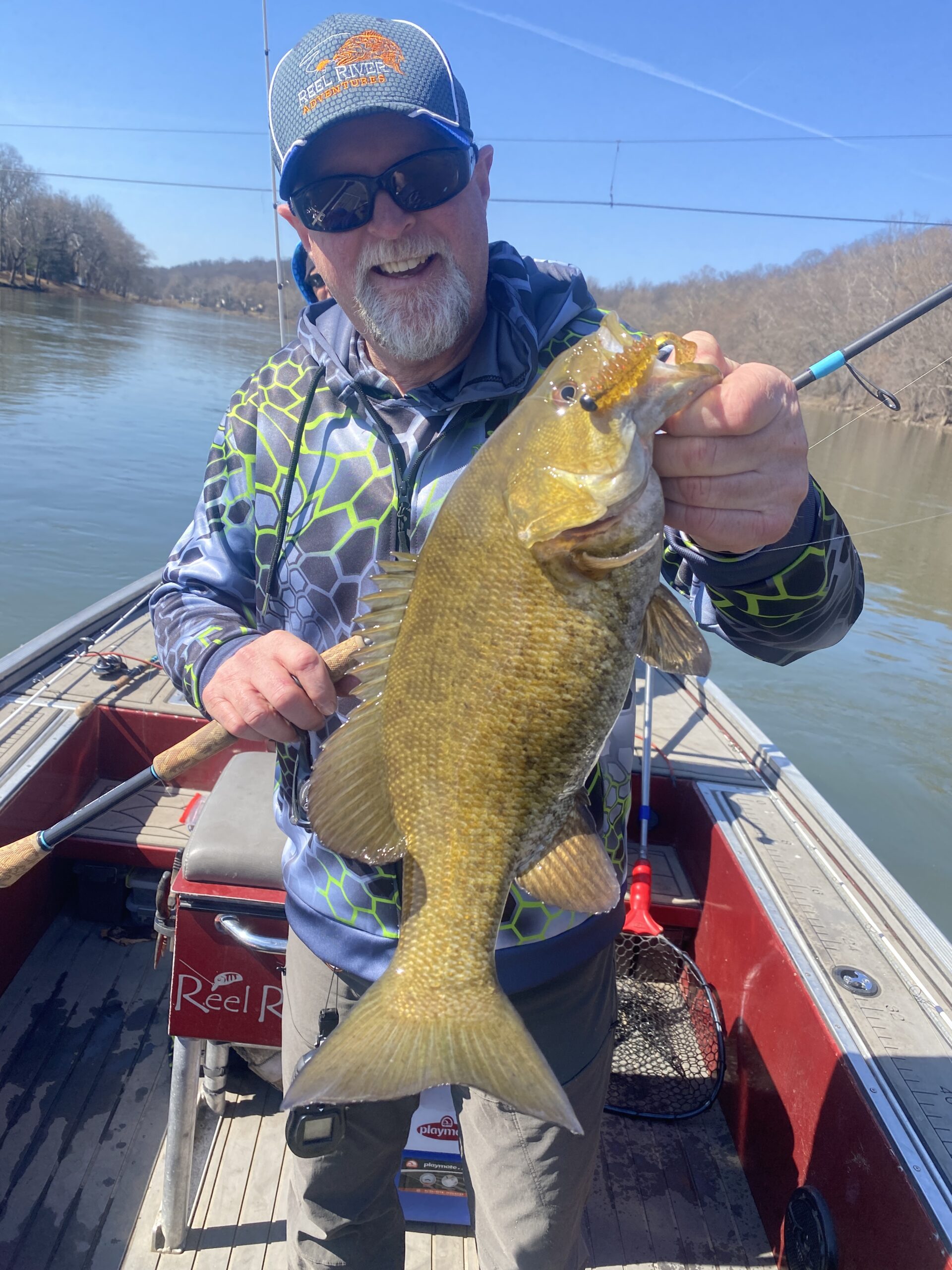
Author Chris Gorsuch is a licensed charter guide in the state of Pennsylvania. He started the Reel River Adventures guide service in ‘07 and spends 225-250 days on the water annually. His home base is on the Susquehanna River. Follow his daily fishing reports on Facebook ‘Reel River Adventures-RRA’ & Instagram @Chris_Gorsuch