

ou’re wasting your time. There’s no wild upland birds in Virgina. It isn’t worth going out for wild birds here.
Do any or all of these sound familiar? Unfortunately, this tends to be the consensus regarding chasing wild birds here in the Commonwealth. Most people assume you must travel hours away to hunt wild birds. Not true. Actually, nothing could be farther from the truth!
The American Woodcock, scolopax minor, more commonly known as timberdoodle, lab twister, bog sucker, sky dancer and night partridge is one of the most fascinating and fun to chase.
Measuring 10”-12” long and weighing 5-8oz, the woodcock sports a superbly camouflaged coat of mottled brown and gray feathers. With large eyes set farther back on their skull, they can scan the air above while dipping their long beaks into the soft soil poking around for earthworms, their favorite.
The nerve endings in their beaks are so sensitive that they can detect the vibrations of the worms underground. Anyone that has ever heard the male’s distinctive peent call knows they are close by.
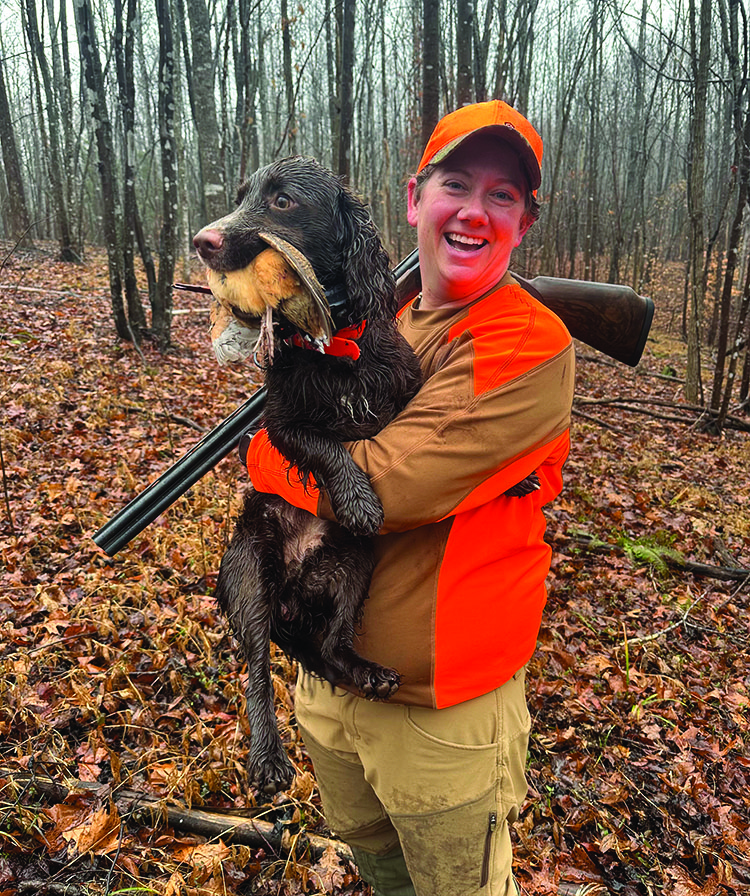
So, how does this odd little cousin of shore birds fit into our wild bird hunting? Beautifully! Woodcocks offer Virginia hunters several weeks of fast flying fun at the end of the barrel. They sit tight until you’re right on top of them and then explode in a flurry of feathers. Their flights are short allowing for multiple opportunities on the same bird if you’re willing to pursue and your pup can relocate them.
Professional guide and avid outdoorsman, Wesley Hodges describes woodcock as “the perfect wild bird pursuit for the young and experienced, hunters, dog handlers, and all breeds of bird dogs. They hold points, flush hard, and are often found in heavy numbers.”
For those going out for the 1st time, I highly recommend using a guide to help you navigate the correct habitat with dogs that are experienced on these odd-looking, little birds.
If you’re using public lands, there are several that offer excellent opportunities for woodcocks. Find properties with low grounds along water sources, bogs of soft humus-type dirt that earthworms and insects treasure and young-growth forests, particularly ferns and holly.
While we do have a resident population, it’s a whole different hunt when the migration moves in. As long as the ground stays fairly soft, they will hang out for a bit but it’s impossible to know when they will move on. Wesley states, “One day they are there, the next day they are gone with the migration. Knowing that allows you to appreciate each day you have pursuing them.”
The other difficulty is an inexperienced dog won’t smell them as their scent is more “earthy”. This can make it frustrating.
Every year, multiple hunters will post on the pages and forums that they have walked miles but can’t find any birds despite hunting in the correct habitat. If you have a buddy that has a dog that will hunt woodcock, see if you can run your dog with the “woodcock broke” dog so your pup can learn how to hunt them.
Luckily, a couple of the Blue Kai pups naturally took to them and have become quite proficient in locating birds allowing Mike and I to enjoy and share the opportunity.
Woodcock season opened up November 11-30 and the 2nd split opens for Boxing Day, December 26-January 19. They will stay in the area as long as their long skinny beaks can pierce the boggy bottoms for worms.
Take a walk in the woods during your Christmas break and experience the fun of true, wild bird hunting right here in Virginia. Be sure to take a friend or family member with you to enjoy the excitement!
Kate Ahnstrom, owner of Virginia Shooting Sports is a certified, professional instructor of the Paragon School of Sporting. She has dedicated her life to sharing her passion for the outdoors and diversifying the dynamics on the clay course and the hunt field. Her tireless dedication to her students’ success is obvious in each and every lesson. Kate is on the pro staff for Syren, the resident pro at Bacon Farms Preserve, Artemis Ambassador, regional coordinatHer for HerUpland, department editor for Woods & Waters magazine, and contributing editor for Women’s Outdoor News. She and her husband, Mike enjoy their small farm in central Virginia where they have a menagerie of animals and plenty of room to train and work their beloved GSPs. Kate loves getting behind the barrel of her Syren Tempio Sporting 20ga for all things clay and feathered.