
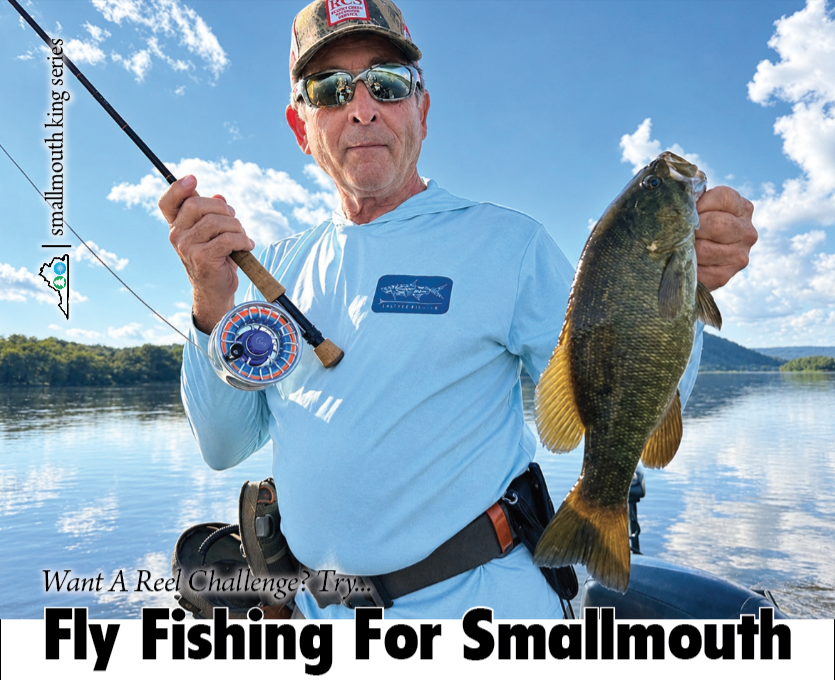
When most of us think of fly fishing, we set a stage of some tranquil stretch of a river. It is quiet with only the soft sounds of water running over shallow rocks, maybe water coming off the ores of a drift boat and the distant sound of a fish breaching the water’s surface while chasing the fly. At least that is what this author imagines.
While the vast majority of our clients use conventional fishing gear, such as spinning and casting rods and reels. From time to time we do get requests from flyfishing enthusiasts who want to sling streamers, wooly buggers, poppers and craw imitations on the Susquehanna. While I have taken a few dozen fly anglers out, in most instances, I refer these inquiries to fellow drift boat guide services that focus solely on smallmouth on the fly. There are many advantages to float fishing from a drift boat. Access to remote, shallow areas, stealth approaches to key areas, professional instruction and the ability to enjoy the river without the noise of a jet or prop drive engine are just a few. Besides, flyfishing is exactly what these crafts were made for.
Personally, I understand the draw to catching river smallmouth on a fly. I spend a fair amount on my own free time chasing smallmouth with a ‘fluff chucker’. The feel of a fly rod loading up on a bass and having those moments where they just will not let you gain an inch on them, is a true testament to their power. I use the term fluff chucker, simply because my skills with a fly rod could only loosely be called flyfishing. It is not as fluid or graceful as it should be, but it somehow gets the job done. No offense to those serious artists out there who make it look so smooth and effortless.
Recently, we had a client that really wanted to experience the big river with the fly rod. We obliged and shared the obvious points above since our jet boats and skillsets are more directed towards conventional tackle. When the day of the trip rolled around, Jack and Steve were all geared up and ready to sling their fly’s. Armed mostly with minnow patterns the guys cast, hooked and battled a fair number of bass. Some would dance across the water and throw their barbless flies; others would fight and battle their way into the net. It was enjoyable to watch and get their feedback as the boat was moved from spot to spot or to inch closer a time or two, so their cast would hit the intended target areas.
Jack’s feedback on both how much he enjoyed the trip and how different it was than a float trip really added a perspective I had not really considered. “We did not have much down time, we were always on active fish or running to the next spot. There were no long drifts through dead water and no time to smoke my cigar.” This is true, the run and gun approach is a big part of bass fishing from a jet boat. The moment the bite slows or drops off, we are running to the next spot, trying to hit as many active spots as possible. Running up, down or across the river as needed to either find active fish or change positions from one side or the other in active areas to better present the lures or flies in this case.
These and other comments that Jack shared struck a cord with my partner Glenn and I. So much so that we contacted Jeff Murray of Murray’s Fly Shop in Edinburg, Virginia. A family run fly shop specializing in fly fishing classes and guided trips. Jeff frequents the Susquehanna River annually and has fished it from drift boat and jet boat, his insight would be key on the topic of fly fishing from these very different crafts. As it worked out, Jeff was in Alaska fishing, but picked up his phone and chatted a while on the topic.
Jeff shared; “The maneuverability of the jet boat, especially when equipped with a trolling motor that has the spot-lock feature is a game changer for flyfishing in my opinion. The micro adjustments that can be achieved are nearly impossible in a drift boat or raft. For example, with a drift boat or raft, once the anchor is dropped in current, a move of two to five feet across current (to get the angler’s cast closer to the target area) is difficult to do without drifting down river and out of position.”
He shared the pros and cons of both vessels for fly fishing and overall, there were many positives that lead up to this sentiment. It isn’t necessarily better; it is just different. The power approach to fly fishing is not only novel, but also a fun way to target bass if you have never done it. Jeff went on to add; “The fact that you can maximize the daylight and target more areas gives anglers more opportunities. With a jet you can move up or down river (quickly) to target an area that is known for last light feeding frenzies. The Susquehanna is wide and near impossible to get the drift boat or raft across or upriver to fish the dozens of grass beds that spread out across the river. You pick your drift line and that is where you are. Small adjustments yes, but big moves are just not possible.”
The overall experience and perspectives shared have altered my take on fly fishing from the jet boat. It opened up a conversation and the opportunity to share the differences and let fly anglers know up front some of the pros and cons fishing this way. May also help us to slow down a little, just long enough to take a lunch break or enjoy a favorite cigar. Power Fly Fishing may not be everyone’s cup of tea, but for those fly anglers seeking a taste of ‘Run and Gun’, it could just be the niche experience they are looking for. If you target bass on the fly but have never tried fishing the fly rod from a jet boat, give it a try and share your take with us. Does power fishing with a fly have a place for purest and fluff chuckers alike?