

When Bass Pro Shop opened in my area over two decades ago, their most noted attraction was the 60,000-gallon fish tank full of largemouth, smallmouth, walleye and other freshwater fish. It is one of the first things patrons see when walking through the doors and it’s a great way to learn to identify species and view them in their underwater habitat.
I am not sure if the BPS in my area still does this, but back then feeding times would be listed on a bulletin board. It was one of my children’s favorite things to watch. Live minnows would be tossed into the tank, and fish would do what they do.
What amazed me about these feedings was how fast the smallmouth were compared to the other fish in the tank. A smallmouth could be 20 feet from where the minnow landed and 95% of the time it would be the first fish in the tank to engage. Even if largemouth were only a few feet from where the minnow entered, the smallmouth would beat them to it. Oddly however, the smallmouth only won the prize about half the time. They were so eager to get there, they would often miss or only stun the minnow. By then a fat lumbering largemouth would be there to claim the prize.
As each minnow entered the tank, the scenario never changed. Their speed and lack of accuracy was a bit of a surprise, and I would learn to use their almost reckless behavior to my advantage on the river.
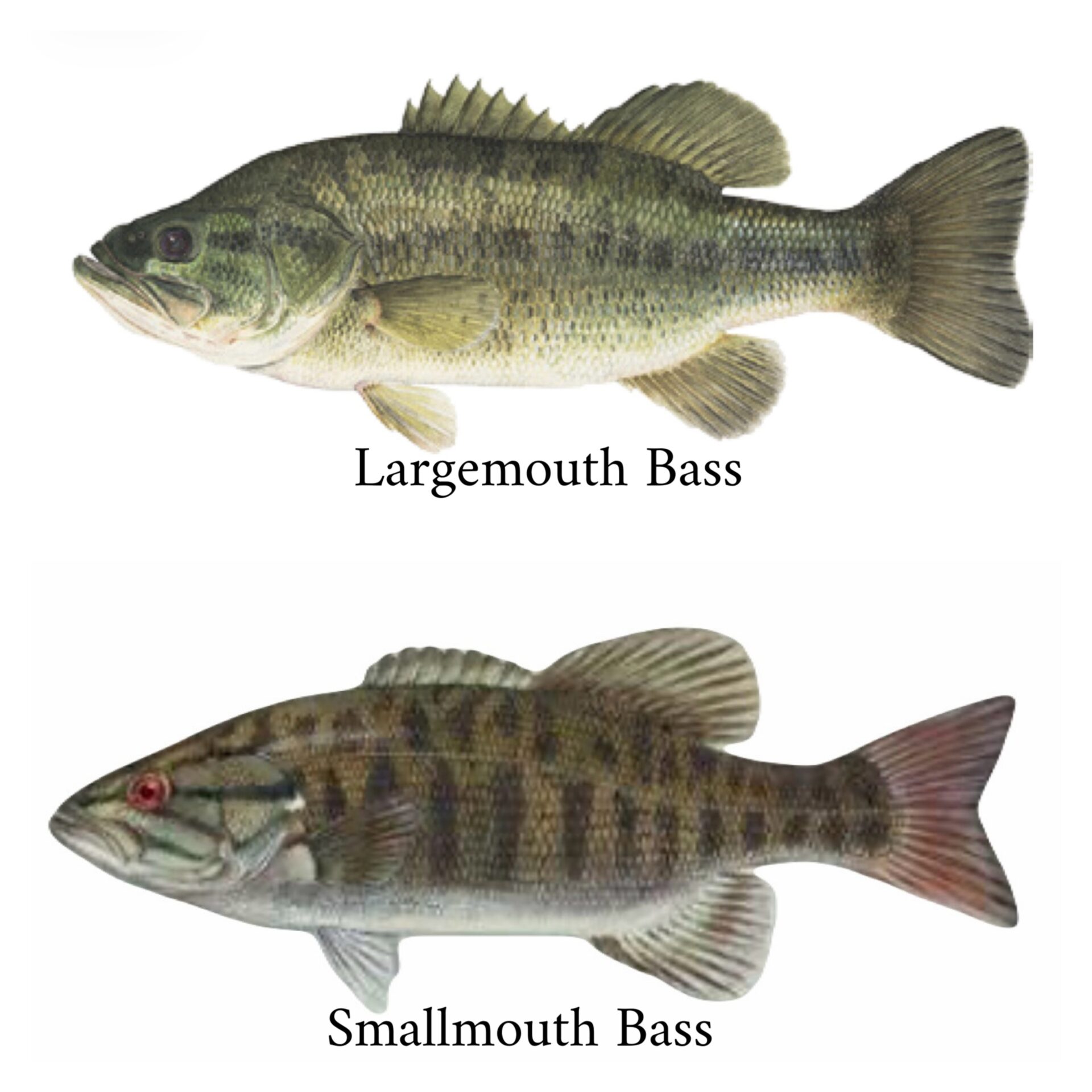
In the freshwater community, the smallmouth bass is more like a magnum sized shotgun round, than a match grade riffle round. Plenty of power but often coming up short in the accuracy department. Comparing the anatomy between smallmouth and largemouth, two things jump out immediately.
First is the obvious difference in the size of their mouths. If you have ever watched a video on bass eating prey, they do this by opening their mouths and creating suction which draw food into their mouths. When they attack, they rush the prey and open their mouths just as they reach them. This draws a large volume of water through their gill plates and creates a vacuum. The larger the mouth, the greater the vacuum.
Beyond the color and bar pattern between them the two species, the difference many anglers miss is the shape and size of their tails. When compared to their size, the tail on an adult largemouth is relatively small. The tips of the tail are also quite rounded. In sharp contrast, the tail of a smallmouth is large for its body size. The tips of the tail are pointed and make a sharp V in the middle. This enables them to manage swift currents and attributes to the speed and power of a smallmouth.
For anglers, this is more than an anatomy lesson. It’s a way to better understand the two species and make adjustments in the pursuit of and tackle selections for targeting them. Before anyone jumps to the conclusion that anglers need to downsize profiles, this is not where we are going. Profile is one thing; hook size may be another. But more on that later.
I grew up fishing for largemouth and smallmouth equally. And while I target smallmouth more than largemouth now, I still get more days in on the green fish. Anyone who shares time on the water for both will draw many of the same conclusions. Not only is the bite itself different, but largemouth rarely miss bait. Outside of popping a frog through dense vegetation, a largemouth bass rarely misses on the first strike. This is not the same when it comes to smallmouth, and anglers can use this to their advantage. Let’s look at the lures and a few differences on the strike, and what anglers can change to be more successful.
Topwater Lures
As mentioned above, except for dense grass and lily pads, largemouth rarely miss on the first strike. When coaching anglers on topwater for smallmouth, the advice I give is to never give up on an active fish. I have personally had smallmouth strike a bait five to six times before hooking up. The best advice I have is to not set the hook based solely on sight and sound and wait until you “feel” the weight of the fish on the line. What I am attempting to stress is that a smallmouth will strike, body slam or tail slap a bait hard enough to sound like someone else is throwing rocks in the water. These strikes may even knock the bait out of the water or even pull it under. Patience is the key, ignore most of what you hear and see and rely on feeling the weight of the fish before setting.
The second part of this is that on a miss, give the bait a pause and start working it again. If you do not set on the miss, the chances of that bass turning on the lure again is quite high. Even if excitement gets the better of you and you miss on the hookset, let things calm down and start working the bait again. Bass will strike many times when they are dialed into a topwater lure.
Bottom Jigs
Here again, the way a largemouth generally strikes a jig is often a different feel than a smallmouth. Whether tossing a large, skirted jig in a stump field or bouncing a tube through rocks, anglers pick up on the subtle differences. Even with heavy jigs, most often with largemouth, you’ll see the line jump or feel a slight “tick” before feeling a big strike. As soon as that line jumps, reel in any slack line and set that hook hard. With a smallmouth, there is often a large thump, and don’t be too surprised if the hookset comes up empty.
Often a smallmouth’s first strike is only intended on stunning or killing the prey. If you come up empty on a strike, leave the lure where it is, often a smallmouth will take the lure a second time. I see this daily.
Soft Plastic Swimbaits
Paddletails, boot tails, regardless of what they are called, all bass species love them. And often size does not matter. 3.5” to 5” and beyond, both species dine on minnows of all sizes. One suggestion I can make for anglers targeting smallmouth is to adjust the hook size over what might work fine for largemouth. While I use large profiles, I often choose jig heads with 2/0 hooks over longer, wider 3/0 sizes. I find that a smallmouth is more apt to take the lure by the head than engulf the entire thing.
Whether this is due to the size of their mouth, or some other factor, I simply find that a 2/0 hook or a short shank hook works better. Likewise, when fishing Carolina Rigs, whenever possible based on the thickness of the lure, a 2/0 offset-hook works better than larger offset-hooks for smallmouth. We tend to have less misses and hook far fewer bass on the outside of their face.
Author Chris Gorsuch is a licensed charter guide in the state of Pennsylvania. He started the Reel River Adventures guide service in ‘07 and spends 225-250 days on the water annually. His home base is on the Susquehanna River. Follow his daily fishing reports on Facebook ‘Reel River Adventures-RRA’ & Instagram @Chris_Gorsuch
So, if you have the privilege to chase both largemouth and smallmouth, especially in the same body of water. I would enjoy getting feedback on if other anglers have found similar differences and make any adjustments to techniques or tackle depending on the target specie.